

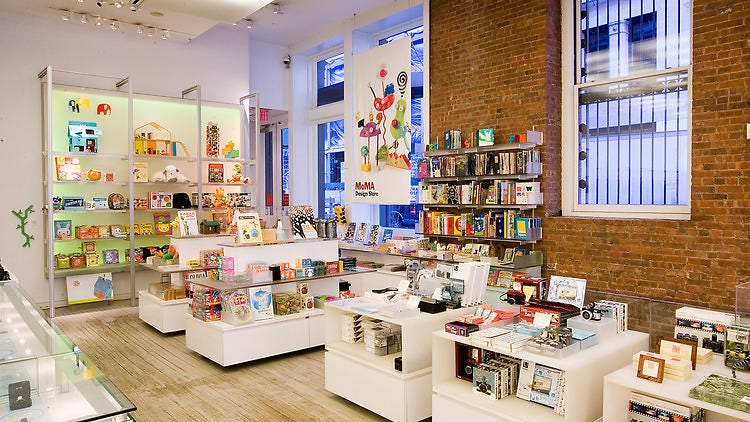
Towards the end of my day at the NYC Museum of Modern Art, I found myself in the gift shop. As any profitable gift shop would have, alongside the artsy prints and postcards, eccentrically-designed toys lined the shelves. Many of them caught my eye, including a 1ft long plastic dragon with articulable joints.
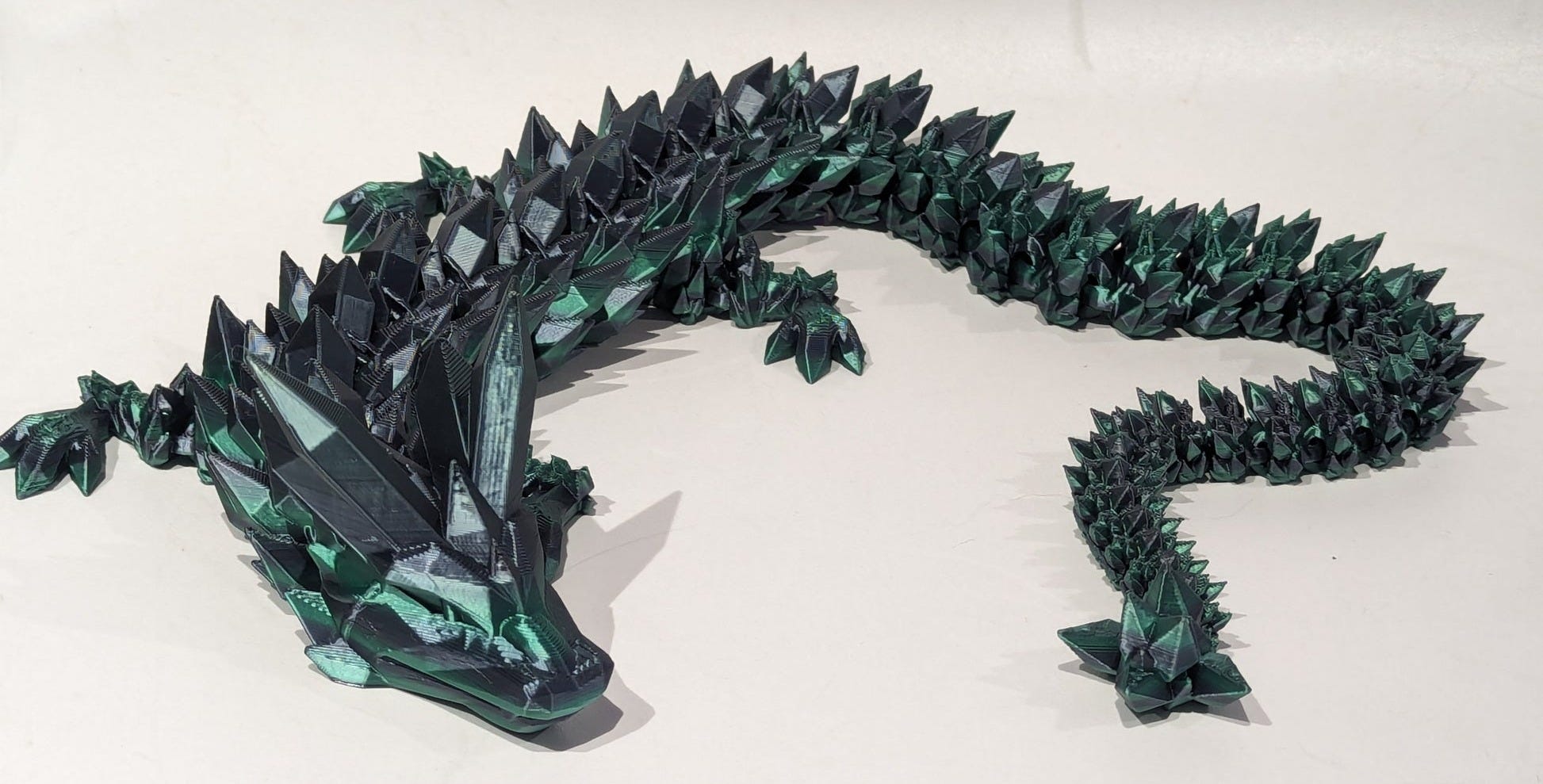
I was quite drawn to this fantastical creature, until I picked it up and felt the surface with my fingertips. There it was: horizontal ridges, the tell-tale sign of a 3D-printed object.
Upon touching the incriminating texture of the dragon’s body, something flipped in my mind. Although I first thought the dragon was quite charming, I immediately felt like it was worth less. Nothing about the toy’s appearance or practical utility changed; a tiny detail, imperceptible at a distance, reduced the value I assigned to it.
While I quickly forgot about the dragon, this experience stuck with me for quite a while. Why was I so quick to reject 3D printed objects that were otherwise perfectly fine?
One possible answer could lie in the story it tells about its design and conception. If the dragon were injection-molded like a normal toy, I could be fairly certain that a good amount of human labor went into the final product. Someone had to CAD the model, consider mechanical and physical constraints, get in touch with overseas manufacturers, review rounds of proofs and samples, and finally handle shipping and distribution. This process would take months. This all went away when I felt the signature 3D-printed ridges; production of the first unit could take less than 3 hours end-to-end, and I couldn’t even be certain that the seller (i.e. the person profiting off of this design) was even the original 3D modeler!
And so, I immediately determined the dragon to be “slop”—3D printed slop. I started to wonder if a similar phenomenon drives discourse about AI art.
A lot of arguments against machine-generated art points towards its lack of humanity or some other intrinsic, invisible quality of human-produced works.
“A machine can never love, so it cannot make art.”
”All art stems from human experience.”
”AI art has no soul.”
I generally dismiss these sorts of unprovable claims as post-hoc rationalizations of initial emotional intuitions. I believe that it’s better tell it like it is—art is only as valuable as humans perceive it to be, and humans just don’t like mass-producible, low-effort slop, whether it be AI images or 3D printed toys. If there were no sweat and tears poured into a work, it’s not as valuable; not because of some intrinsic quality or lack of a “soul,” but just because humans feel as such. And that’s okay! We don’t need a rational reason to not like something, despite often being pressured to state one in critical settings.
A few concluding thoughts.
The future: it’s possible this value assignment based on labor input will change in the future. When the camera was invented, it was similarly deemed as “slop” and “not real art” because taking a picture took fractions of the time spent on painting a portrait. This sentiment has largely gone away, and we are able to appreciate photography.
An amusing infohazard: imagine your friend has an otherwise beautiful picture hung on their living room wall, fully believing it was human-made. You, however, are able to tell that it was AI-generated. Do you reveal this to your friend? The knowledge that the image was machine-generated is an infohazard, as it would likely extinguish almost all enjoyment your friend derives from the picture. Full article on infohazards coming soon.
More on intuitionism: full article coming soon. In a nutshell, it is human nature to be averse to / disgusted by certain things, whether it be machines in creative fields or other, more taboo constructs that I will tactfully save for a future article. I don’t think these intuitions are invalid—we just need to tell the real story by discarding the post-hoc rationalizations and revealing the true feelings fueling these intuitions. If you’re interested, I would recommend The Righteous Mind by Jonathan Haidt.